AE 200 Enclosure Design Studio
February 2023
Created with Olivia Francom, Alex Kennedy and Leanne Kinlin
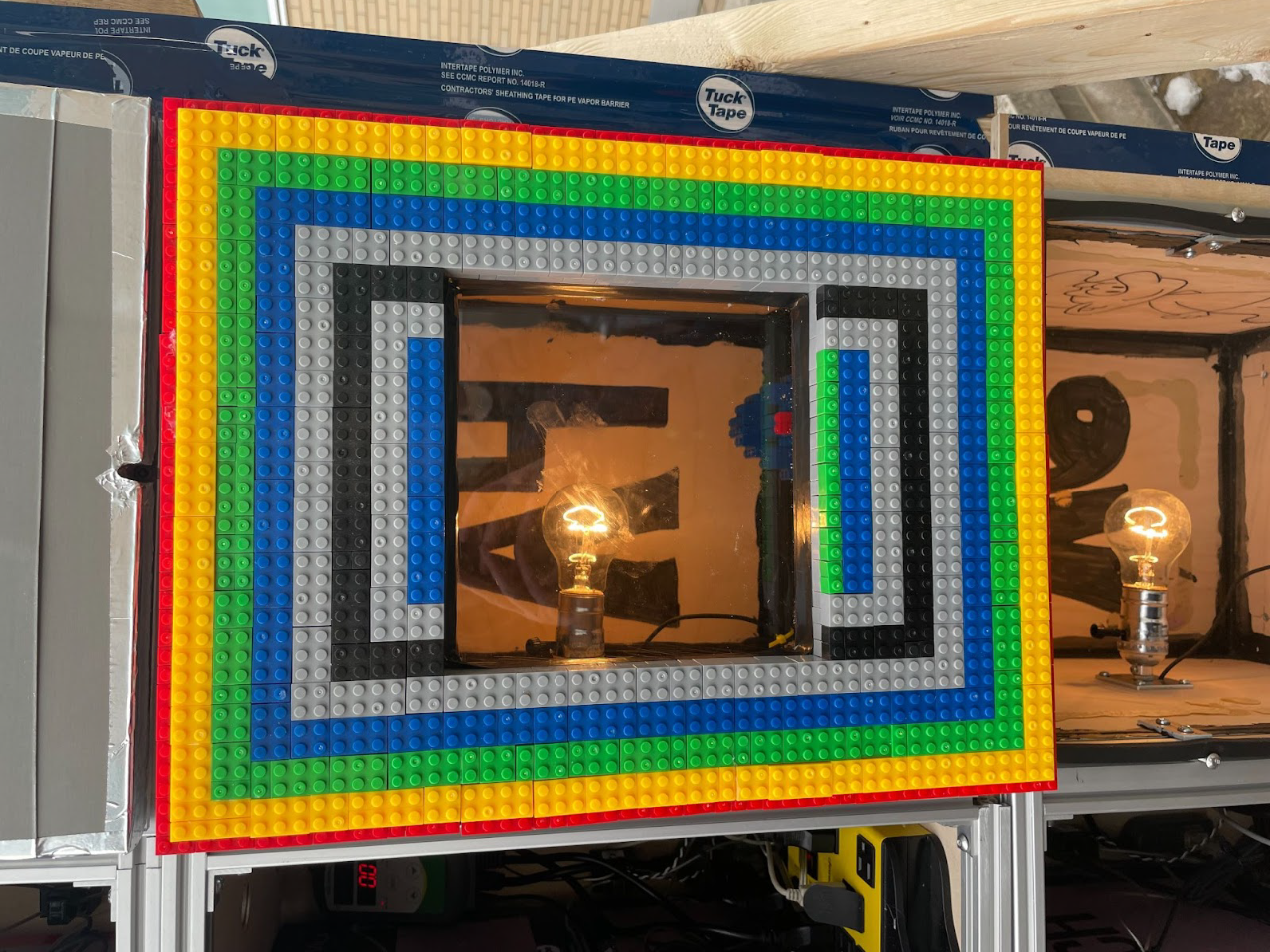
For this lab, my group and I designed and built a south-facing façade for a miniature apartment unit using LEGO bricks. Our goal was to minimize heating energy while keeping the interior temperature between 18–25°C, using a 40W lightbulb as the heating source. We applied passive design strategies from AE 280, focusing on insulation, sealing, and solar heat gain, while working within a 30% window-to-wall ratio (WWR). The LEGO bricks were chosen for their low thermal conductivity and ability to create an enclosed air gap, enhancing the façade’s insulating properties.
We constructed a thick, three-brick wall with a rainbow pattern for visual appeal and structural strength. The design included one large window to maximize solar insolation during winter, and we sealed all edges with tape to reduce air leakage. No additional shading devices were used, as the wall itself provided sufficient protection while allowing sunlight to warm the interior. The LEGO façade was securely mounted using screws and removable pieces, ensuring it could withstand wind and snow loads without protrusions that might trap moisture or snow.
During testing, our façade performed well, maintaining temperatures above 18°C and only experiencing 4.6 overheating degree-hours, mostly in mid-afternoon. This confirmed the effectiveness of the LEGO cladding and the 30% WWR in balancing heat retention and solar gain. Overall, the project helped us understand the relationship between façade design and thermal performance, and gave us hands-on experience in applying building science principles to a real-world scenario.